Are you starting a new tech business in Bangladesh and feeling completely overwhelmed by the endless technology choices? You are certainly not alone in this journey. When you are pouring your passion and life savings into a startup, the last thing you need is a software architecture that drains your budget or crashes when your first customers arrive.
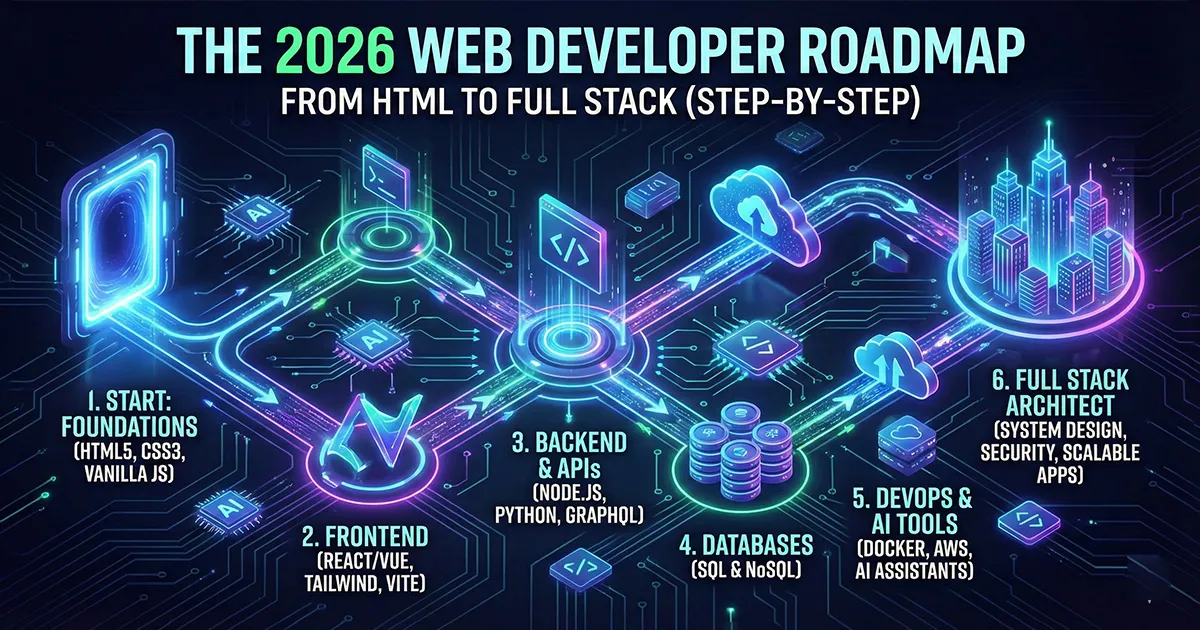
I have been building web applications for over 15 years, and I have seen countless founders lose sleep over choosing the right tech stack. You need clear, empathetic guidance to make the best technical decisions for your future. That is exactly why I created The 2027 Full Stack Developer Roadmap: Mastering React, Next.js, and Laravel.
By following this modern blueprint, we can eliminate your technical anxiety and build a product that scales effortlessly. Let us explore exactly how decoupling your frontend and backend will give your new business the ultimate competitive advantage.
The Top 3 Pain Points Founders Face Today
Startups in Bangladesh face unique technical and economic hurdles. Let's examine the top three pain points you are likely experiencing right now.
-
Bloated Budgets from Bad Architecture: Traditional, tightly-coupled applications become incredibly expensive to scale as your business grows. If you decide to launch a mobile app later, a monolithic architecture often forces you to rewrite your entire system from scratch.
-
Sluggish Mobile Performance: Slow load times kill user engagement and destroy your search engine rankings. Heavy client-side JavaScript applications severely frustrate users on slower mobile networks across the country.
-
The Developer Talent Gap: Finding engineers who truly master both secure server-side logic and highly interactive UI design is a major hiring headache.
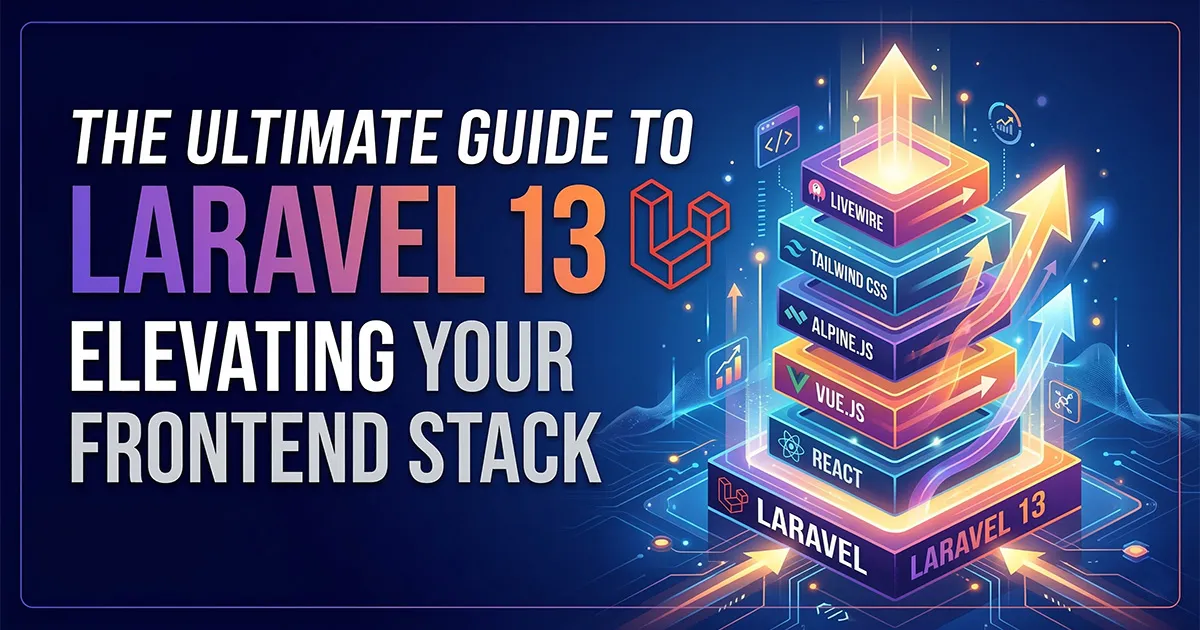
Standardizing your tech stack solves these exact problems. By using Laravel 13 for the backend and Next.js 16 for the frontend, we physically separate your business logic from your user interface. This makes hiring easier and development much faster. [Internal Link: The Cost of Hiring a Developer]
The Power of Decoupling: Next.js 16 vs. Laravel 13
Understanding the division of labor between your frontend and backend is crucial for your project's success. When we decouple these layers, each framework gets to do exactly what it does best.
| Core Concept | Next.js 16 (The Frontend) | Laravel 13 (The Backend) |
| Primary Language | TypeScript / JavaScript | PHP 8.3+ |
| Main Responsibility | User Interface, Routing, SEO, Interactivity | Business Logic, Database, Security, APIs |
| Rendering Strategy | React Server Components (RSC), Hydration | JSON:API Responses, Background Queues |
| Key 2027 Features |
Turbopack default, |
Native AI SDK, Advanced Queue Routing |
| Performance Edge | Low Total Blocking Time (TBT), Fast First Paint | High Throughput (Octane), Fast Database Queries |
Step 1: Architecting Your Secure Laravel 13 Backend
Laravel remains the undisputed king of backend frameworks because it prioritizes developer happiness and robust security. In our roadmap, we configure Laravel 13 exclusively as an API, completely stripping away its traditional Blade visual templates.
How it works: We begin by defining your database structure using Laravel's powerful Eloquent ORM. We must encapsulate all of your business rules—like calculating subscription tiers or processing payments—inside dedicated "Service" classes rather than messy controllers. This modular approach ensures your code remains clean, testable, and easy to upgrade.
Next, we implement user authentication using Laravel Sanctum. Sanctum provides a featherweight authentication system specifically designed for Single Page Applications and decoupled frontends. By issuing secure, HttpOnly cookies instead of vulnerable local tokens, we ensure your application is fortified against malicious cross-site scripting (XSS) attacks.
Step 2: Building Your Lightning-Fast Next.js 16 Frontend
Next.js 16 represents a massive leap forward in frontend capabilities, giving your users a buttery-smooth experience. The secret weapon here is React Server Components (RSCs).
How it works: RSCs allow us to render your complex UI components on the server at build time or request time. This means we send zero JavaScript to the client's browser for those specific components, dramatically speeding up load times on mobile devices.
When building your frontend, we utilize the native fetch() API extended by Next.js to communicate with your Laravel backend. By leveraging the new use cache directives, your app can serve static, cached pages instantly while quietly fetching dynamic user data in the background. This guarantees flawless Core Web Vitals and keeps Google's search algorithms incredibly happy.
Step 3: Securely Bridging the Gap Between Frontend and Backend
The most critical step in The 2027 Full Stack Developer Roadmap: Mastering React, Next.js, and Laravel is connecting these two isolated systems securely. This requires meticulous configuration of Cross-Origin Resource Sharing (CORS).
How it works: Inside your Laravel backend, we configure the config/cors.php file to explicitly allow requests from your specific Next.js domain. We must also set the supports_credentials option to true, which tells the server to accept cookies from the frontend.
On the Next.js side, we configure your HTTP clients (like Axios) to include withCredentials: true on every single request. This ensures that Laravel's secure Sanctum cookies are passed seamlessly back and forth, keeping your users safely logged in as they navigate your platform.
The Golden Rule:
Never trust the client-side browser with your core business logic or direct database access. All data validation, role-based authorization, and pricing rules MUST remain strictly within your secure Laravel backend to ensure maximum security and maintainability.
Embracing Next-Generation AI and Performance Tools
To truly dominate your market in 2027, you must leverage emerging tools that give you an unfair advantage. Thankfully, both frameworks in our stack have evolved to meet enterprise demands.
Laravel 13 now ships with a first-party AI SDK, providing a unified API for text generation, embeddings, and tool-calling agents. We can easily integrate AI-driven customer support bots or semantic search directly into your backend without relying on fragile third-party wrappers.
For platforms expecting massive traffic surges, we utilize Laravel Octane. By keeping the framework booted in memory using modern servers like FrankenPHP, Octane eliminates traditional PHP loading delays, allowing your backend to handle tens of thousands of requests per second. Your Next.js frontend will consume this rapid data and serve it to users instantaneously.
Conclusion & Next Steps
Starting a business is hard enough without worrying about whether your software will survive its first year. By mastering the synergy between Laravel's backend security and Next.js's frontend brilliance, you are establishing a foundation built for unstoppable growth.
This hybrid roadmap solves the most pressing pain points faced by startups in Bangladesh today. It guarantees dominant SEO, provides a clear separation of concerns for your future engineering team, and protects your platform from costly architectural rewrites down the line. You deserve an application that works just as hard as you do.
Are you ready to turn your vision into a high-performance reality? Stop guessing with your tech stack and let the experts handle the heavy lifting. Contact me at naimbd.com today to schedule a comprehensive website evaluation and architecture consultation for your next big project.
External References for Further Reading: