Have you recently been told by your development team that your entire application needs a costly "rewrite"? If you are starting a new digital business in Bangladesh, or trying to scale an existing one, that word alone can cause sleepless nights. You might be feeling confused, overwhelmed, and worried about how technical debt is eating into your hard-earned financial runway.
Trust me, I understand your anxiety. As a senior full-stack web developer with over 15 years of experience, I have guided countless non-technical founders through this exact technological maze. You are not alone in this struggle, and there is a predictable, safe path forward.
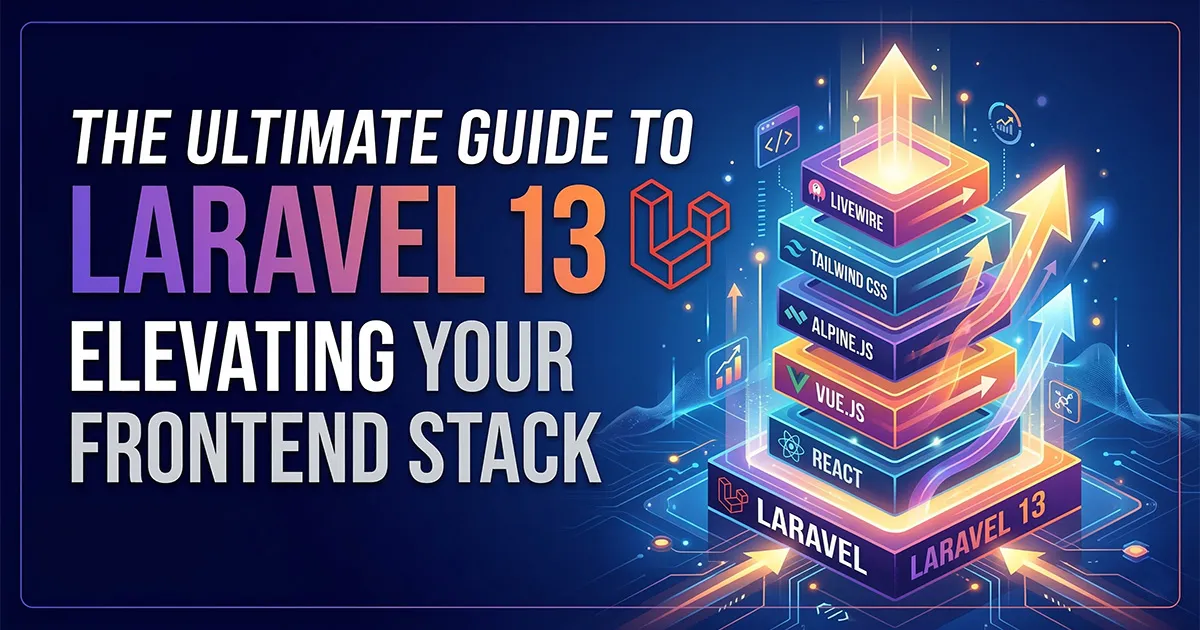
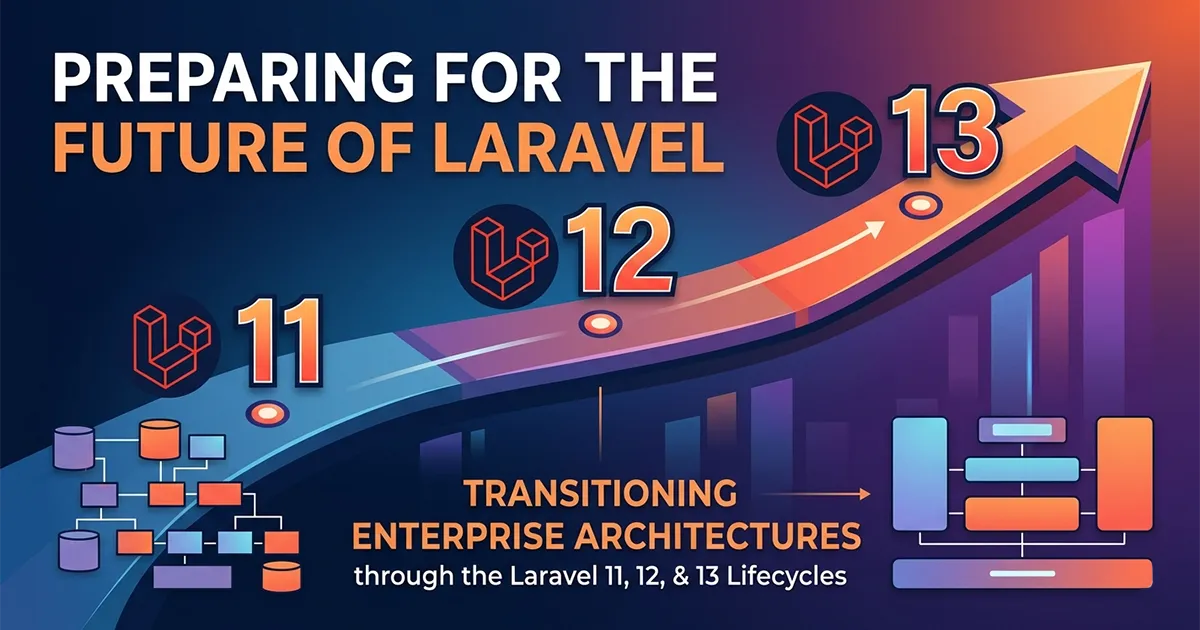
In this comprehensive guide, we are focusing on Preparing for the Future of Laravel. We will demystify how transitioning enterprise architectures through the Laravel 11, 12, and 13 lifecycles can save your budget, protect your customer data, and future-proof your business. Let’s break down the technical jargon together and build a scaling strategy that actually makes sense for your peace of mind.
The Hidden Costs Threatening Startups in Bangladesh
The startup ecosystem in Bangladesh is incredibly vibrant, but it comes with unique structural challenges. We currently boast more than 2,500 unique startups, fueled by a young, tech-adaptable population of over 164 million people. However, as your business moves from an initial idea to a growing enterprise, you face a critical hurdle known as the "missing middle" in funding and operational scaling.
Often, early-stage founders prioritize incredible speed to market over structured coding practices. While this gets your Minimum Viable Product (MVP) launched quickly, it silently builds up "technical debt". Think of technical debt just like credit card debt: it buys you speed today, but you pay compounding interest later through constant software bugs and slow development times.
If your platform is fragile, every new feature takes longer to build and causes your engineering team immense frustration. This is not just a technical inconvenience; it is a direct barrier to your business growth. It erodes user trust, drives away top development talent, and scares off potential venture capital investors.
Deconstructing the Laravel Lifecycle: 11, 12, and 13
To fix these underlying architectural issues without starting from scratch, we must look at the tools we use to build your application. Laravel commands a massive 39% share of the PHP framework market, making it the absolute standard for enterprise scaling. Let us look at how the framework has evolved to make your life as a business owner exponentially easier.
Laravel 11: The Clean Foundation (Released 2024)
Released in early 2024, Laravel 11 was a massive leap forward in simplifying how applications are built. The creators deliberately removed unnecessary folders and "boilerplate" code that used to clutter the application structure. For your business, this translates to cleaner code repositories, fewer architectural debates among your developers, and much faster onboarding times for new hires.
It also introduced a game-changing feature called Laravel Reverb. This built-in WebSocket server allows your application to handle robust, real-time capabilities like live chat or instant notifications without needing to pay for expensive third-party services.
Laravel 12: The Stable Bridge (Released 2025)
Released in February 2025, Laravel 12 was designed specifically to give business owners a breather. The core team focused entirely on continuous quality-of-life improvements with almost zero "breaking changes". This means your development team can upgrade your application without having to rewrite huge portions of your existing code.
Laravel 12 also introduced native integrations with WorkOS AuthKit. This provides your business with enterprise-grade Single Sign-On (SSO) and social authentication right out of the box. You get world-class security without having to pay a developer for weeks of custom coding.
Laravel 13: The AI-Native Powerhouse (Released 2026)
Launched on March 17, 2026, Laravel 13 is where the future truly begins. It requires a minimum of PHP 8.3, ensuring your server runs on the fastest, most secure technology available today. Astoundingly, it continues the trend of having zero breaking changes from version 12, making the upgrade incredibly smooth.
The most exciting addition for business leaders is the first-party Laravel AI SDK. This allows your developers to integrate artificial intelligence and large language models directly into your product smoothly and securely. It also introduces Passkey authentication, elevating your platform's security far beyond traditional passwords.
Data Visualization: Comparing the Paradigms
To help you understand the tangible business value of these upgrades, I have created a clear comparison. Here is a look at how transitioning from the Laravel 11 standard to the new Laravel 13 ecosystem impacts your bottom line.
| Business Requirement | Laravel 11 Paradigm | Laravel 13 Paradigm | Tangible Business Impact |
| User Authentication |
Standard session & token security. |
Native Passkeys & WorkOS SSO. |
Eradicates password theft risks; satisfies enterprise B2B clients. |
| Real-Time Features |
Laravel Reverb (requires Redis for scale). |
Reverb Database Driver (no Redis needed). |
Vastly reduces monthly cloud server costs and complexity. |
| Data Search |
Standard database queries. |
Semantic Vector Search |
Enables AI-driven product recommendations and smarter user searches. |
| Performance Speed |
Runs on PHP 8.2+. |
Requires PHP 8.3+; optimized for PHP 8.4. |
Reduces server memory usage and speeds up page loads by up to 20%. |
Step-by-Step: Transitioning Your Enterprise Architecture
You might be asking, "How do we actually safely upgrade my business application?" Transitioning safely requires a disciplined, step-by-step approach rather than a chaotic weekend code-a-thon. Here is how professional engineering teams execute this flawlessly.
Step 1: Upgrade Your Underlying Server to PHP 8.3
Before touching the Laravel framework, your server infrastructure must be modernized. Laravel 13 strictly requires PHP version 8.3 or higher. Upgrading PHP ensures your application benefits from advanced memory management and critical security patches. If your server is stuck on an older version, your app will simply break during the upgrade process.
Step 2: Implement Domain-Driven Design (DDD)
As applications grow, traditional code structures become messy and intertwined. We transition our clients to Domain-Driven Design (DDD), which organizes code around specific business rules (like "Billing" or "Inventory") rather than technical folders. This makes your system vastly easier to maintain, scale, and test as your customer base multiplies.
Step 3: Automate Your Code Refactoring
Gone are the days of developers manually scanning thousands of files for deprecated code. We leverage automated tools like Laravel Shift or Rector to systematically scan your codebase. These tools automatically upgrade your syntax to comply with Laravel 13 standards, saving you countless hours of billable developer time.
Step 4: Run Concurrent Automated Testing
You cannot afford for your live application to break when customers are trying to check out. By utilizing Laravel’s parallel testing capabilities (php artisan test --parallel), we can run hundreds of automated tests simultaneously. This mathematically proves that your core business logic is completely intact before the new version ever touches a live server.
The Golden Rule:
Never view your software architecture as a static, one-time investment. Upgrades should always be treated as continuous, routine maintenance—not catastrophic, multi-year rebuilds. By staying current with the framework lifecycle on a monthly retainer, you absorb the small marginal costs of upgrading and completely prevent the compounding interest of technical debt.
Frequently Asked Questions (FAQ)
To provide you with maximum clarity, I have compiled the top five questions business owners just like you are actively searching for on Google.
1. When should a business upgrade an existing site to Laravel?
Upgrading makes immediate sense when your site is running slow, adding new features feels incredibly risky, or your developers warn you about security vulnerabilities. If you want your product to grow predictably without rebuilding it from scratch every few years, an incremental Laravel upgrade is a strategic necessity.
2. What is the real cost of falling behind on Laravel versions?
The cost is exponential technical debt. Startlingly, nearly 60% of Laravel applications are at least two versions behind. When you delay updates, the cost of eventually fixing security holes and bridging the gap between old code and new servers becomes staggeringly expensive.
3. Do I need to rebuild my entire app to use Laravel 13?
Absolutely not. Laravel 13 was explicitly designed with zero breaking changes from Laravel 12. If your current application is relatively modern and runs on PHP 8.3, upgrading to Laravel 13 is an incremental process that takes hours, not weeks.
4. How does Laravel 13 handle real-time features like chat or live tracking?
Laravel 13 massively simplifies this through Laravel Reverb's new database driver. Previously, scaling live notifications required a separate, expensive server infrastructure like Redis. Now, these real-time capabilities can run directly on your existing database, lowering your operational complexity and hosting bills.
5. Are there security risks if my business stays on Laravel 10?
Yes, severe risks. Laravel 10 officially reached its "End of Life" for security fixes in February 2025. If hackers discover a new vulnerability today, the creators of Laravel will not release a patch for version 10. You must upgrade to protect your users' sensitive data.
Conclusion & Next Steps
Transitioning your enterprise architecture does not have to be a terrifying, budget-draining ordeal. By understanding the distinct advantages of the Laravel 11, 12, and 13 lifecycles, you can actively eliminate technical debt before it paralyzes your business. Modernizing your code ensures your platform is secure, blazingly fast, and equipped with the latest AI capabilities.
You have worked entirely too hard building your business to let outdated technology hold you back. We are here to guide you through this transition smoothly, with absolute transparency and empathy for your bottom line.
Are you ready to stop worrying about your application’s health?
Do not wait for a critical failure to force your hand. Contact a professional web developer today to secure your digital future. [Internal Link: Click here to book your free, comprehensive website architecture evaluation with our expert team now!]
External References for Further Reading
-
Laravel Official Release Notes & Lifecycle: https://laravel.com/docs/master/releases
-
Forbes Business Council: Evaluating Web Development Options: https://www.forbes.com/councils/forbesbusinesscouncil/evaluating-web-development-options/
-
United Nations ESCAP: Startup Ecosystem in Bangladesh: https://repository.unescap.org/