Imagine you have just launched your dream startup in Dhaka. You invested heavily in a beautiful website, but within months, the platform becomes sluggish, and your developers are constantly struggling to add modern features like AI or advanced search. I have spent over 15 years as a senior full-stack web developer, and I see this exact frustration paralyzing new business owners every single day.
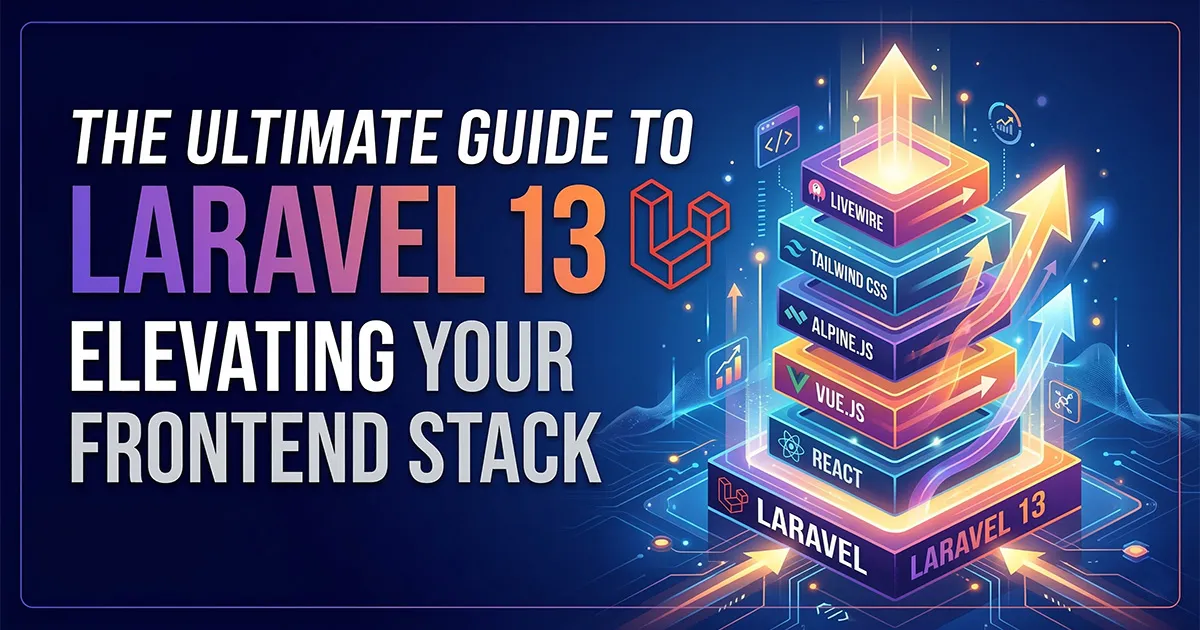
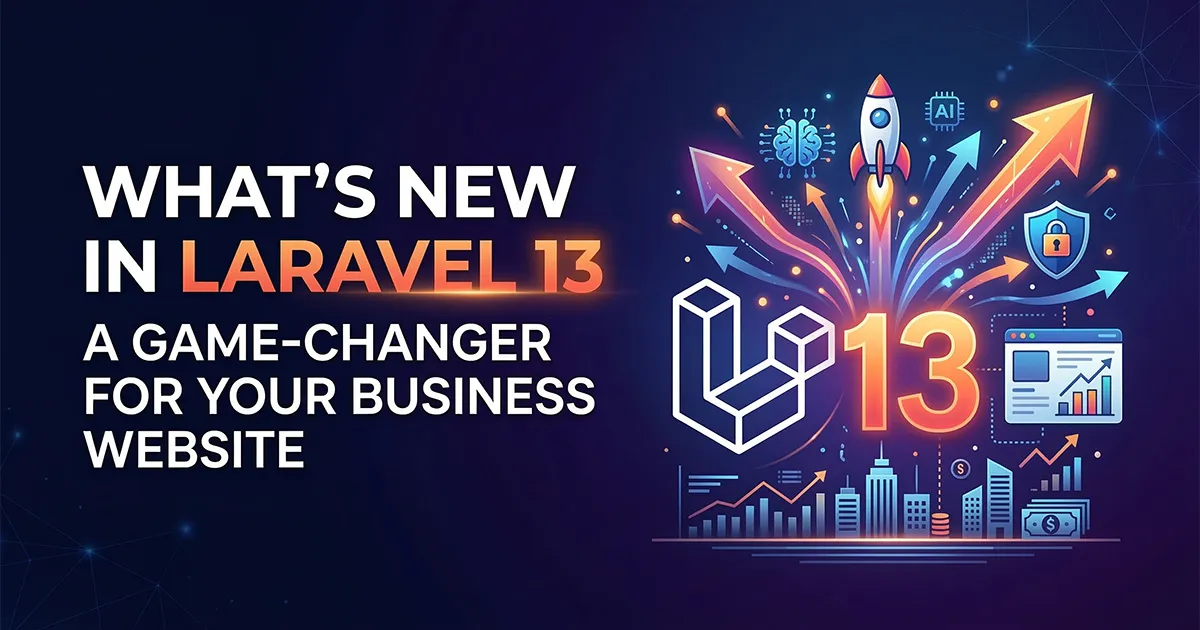
You are entirely justified in feeling confused and overwhelmed by the rapid pace of technology. However, there is incredible news on the horizon for your digital business. If you are wondering What's New in Laravel 13, you are about to discover a framework update that fundamentally shifts how web applications are built. This new release, which requires PHP 8.3 as a baseline, focuses heavily on AI-native workflows, stronger defaults, and minimal breaking changes to make upgrading entirely seamless.
Let us take a deep dive into how these powerful new tools will save you money, secure your customer data, and elevate your business above the competition.
Embracing the Future with the Laravel AI SDK
One of the biggest pain points for startups today is figuring out how to integrate Artificial Intelligence without breaking the bank. Previously, adding AI features meant your developers had to write messy, complex code to communicate with expensive third-party services. This often resulted in buggy applications and inflated hourly billing.
What's New in Laravel 13 completely revolutionizes this process by introducing the Laravel AI SDK. This massive addition is a first-party, provider-agnostic API built directly into the framework. It allows your development team to easily implement text generation, tool-calling agents, image generation, audio synthesis, and embeddings natively within your application.
-
Why this matters for you: Instead of juggling multiple API documentation sites, your team has a clean, organized foundation.
-
The Business Benefit: This drastically reduces development time. You can now deploy smart customer support agents or automated content generators in a fraction of the time it used to take.
Smarter Customer Experiences via Semantic & Vector Search
Have you ever searched for a specific product on an e-commerce site, typed in "breakfast," and received zero results because the product was listed as "pancakes"? Traditional databases rely on exact keyword matches, which is incredibly frustrating for your customers. When customers cannot find what they want quickly, they abandon your website.
Laravel 13 solves this massive conversion killer by introducing native vector query support. You can now run semantic similarity searches directly from the query builder using PostgreSQL and pgvector. This means the search engine understands the context and meaning behind the user's words, rather than just matching spelling.
By implementing vector search, your application can cluster similar concepts together. A search for "athletic footwear" will instantly return "running shoes," creating a magical, intuitive experience for your users.
Expanding PHP Attributes for Cleaner, Faster Code
As a business owner, you might not read your website's source code, but you absolutely pay for its maintenance. When code is messy and bloated, it takes developers twice as long to find and fix bugs. Historically, Laravel required developers to use long lists of class properties to configure how database models behaved.
What's New in Laravel 13 changes this by aggressively adopting PHP 8 attributes over traditional class properties. You can now configure queues, routing, authorization, and Eloquent database models entirely via simple, declarative attributes at the very top of the file.
This creates a beautifully clean and readable codebase. When you hire new developers as your startup grows, they can understand your system architecture instantly, drastically reducing their onboarding costs.
| Feature Concept | Traditional Methodology | What's New in Laravel 13 |
| Model Configuration | Cluttered arrays inside class files. | Clean #[Fillable] and # attributes. |
| Cache Optimization | Retrieve, modify, and re-store data. | Native Cache::touch() for zero-overhead extensions. |
| Queue Management | Scattered rules across multiple files. | Centralized routing using Queue::route(...). |
JSON:API Resources and Backend Performance
If your business strategy involves launching a mobile app alongside your website, your platforms need to communicate seamlessly. They do this through an Application Programming Interface (API). Laravel 13 adds first-party support for returning responses that are fully compliant with the global JSON:API specification.
This update natively handles sparse fieldsets, relationship inclusion, and resource links. In plain English, this ensures your mobile app and website share data perfectly, preventing broken screens and missing user information.
Furthermore, performance is critical for users in Bangladesh who may be on slower mobile networks. A highly requested performance tweak in this release is the Cache::touch() method. You can now extend an existing cache item's Time-To-Live (TTL) without having to retrieve and re-store its value over the network. This significantly reduces server overhead, making your website feel lightning-fast.
Unmatched Security and Queue Management
When your application handles heavy background tasks, like processing payments or sending out hundreds of promotional emails, it uses "Queues". A new Queue::route(...) method allows your developers to define default connection and queue routing rules for specific jobs in a single, centralized location. This ensures your system never crashes under a heavy workload.
Security is also tighter than ever. The CSRF (Cross-Site Request Forgery) protection has been formalized into a dedicated PreventRequestForgery middleware. This update now includes origin-aware request verification alongside traditional token-based protection. Hackers attempting to impersonate your users from fake domains will be blocked instantly.
The Golden Rule: Never compromise your business's future by clinging to outdated technology to save a short-term buck. Upgrading to Laravel 13 and PHP 8.3 is not just about shiny new features; it is a critical investment in your website's baseline security, speed, and long-term survival in a competitive market.
Frequently Asked Questions (FAQ)
1. What is the biggest advantage of What's New in Laravel 13?
The biggest advantage is the mandatory shift to PHP 8.3 and the introduction of the Laravel AI SDK. This combination guarantees a highly secure, incredibly fast application that can easily integrate modern AI tools without expensive third-party workarounds.
2. How does the new Cache::touch() method actually work? Previously, to keep data in fast memory, the server had to download the data and re-upload it with a new expiration timer. Cache::touch() skips this entirely by sending a single command to extend the timer, saving massive amounts of network bandwidth and server processing power.
3. Will upgrading to Laravel 13 break my existing website? No, the transition is designed to be incredibly smooth. The core team focused heavily on minimal breaking changes. Features like the new PHP attributes are fully backward-compatible, meaning your existing code will continue to function perfectly while you gradually adopt the new standards.
4. What exactly is Semantic Vector Search?
Traditional search requires the user to spell keywords exactly as they appear in your database. Semantic vector search uses AI to understand the actual meaning of the query. It allows users to search for "cold weather gear" and successfully find "winter jackets," dramatically improving user satisfaction.
5. Why are PHP Attributes better than class properties? PHP Attributes allow developers to tag files with specific instructions right at the top of the code document. Instead of hunting through hundreds of lines of code to find security rules like $fillable or $hidden, they can instantly see rules like #[Fillable] at a glance, reducing human error.
Your Next Step Toward Digital Dominance
Navigating the web development landscape does not have to be a source of constant anxiety for your startup. By understanding the immense power of What's New in Laravel 13, you are already taking control of your business's digital future. From the seamless integration of the Laravel AI SDK to the incredible user experience provided by semantic vector search, this framework is built to help your brand succeed and scale effortlessly.
You do not need to tackle this technical transition alone. We understand the unique challenges faced by small businesses in Bangladesh, and we are here to provide clear, actionable guidance. Contact us today at naimbd.com for a comprehensive website evaluation. Let our expert developers upgrade your platform to Laravel 13, ensuring your business remains fast, secure, and miles ahead of the competition.
Authoritative Sources for Further Reading:
-
Official Laravel Documentation: https://laravel.com/docs
-
PHP 8.3 Release Notes and Performance Updates: https://www.php.net/releases/8.3/en.php
-
PostgreSQL Vector Search Foundation: https://github.com/pgvector/pgvector
-
JSON:API Official Specification: https://jsonapi.org/